
Ministry of Finance

The Ministry of Finance oversees taxation, revenue and government spending. The ministry supports the Treasury Board and Minister of Finance by providing financial and administrative services and leadership to government ministries, agencies and the public.
1. Information you might be looking for
Saskatchewan Business and Consumption Taxes
Get information about Saskatchewan’s liquor consumption tax, the PST, fuel and tobacco tax programs and more.
Personal Income Taxes
Get information about Saskatchewan's personal income tax structure.
Saskatchewan Electronic Tax Service (SETS)
To assist you with filing provincial tax returns for your business, Saskatchewan Finance offers the Saskatchewan Electronic Tax Service.
Provincial Budget
Find out about the 2024-25 Budget.
First-Time Homebuyers' Tax Credit
A provincial non-refundable income tax credit of up to $1,100 for eligible taxpayers on qualified homes purchased after December 31, 2011.
Canada Pension Plan (CPP) Enhancement
Learn About the Canada Pension Plan (CPP) Enhancement and how it will impact employees and employers.
2. Plans and Annual Reports
Plan for 2024-25
The plan for 2024-25 reflects the government's goals of sustaining growth and opportunities for Saskatchewan people, meeting the challenges of growth, securing a better quality of life for all Saskatchewan people and delivering responsive and responsible government.
For previous ministry plans, please visit Prior Year Plans, Reports and Guiding Documents.
Annual Reports
The Ministry of Finance's 2022-23 Annual Report presents the ministry's activities and results for the fiscal year ending March 31, 2023. It reports to the public and elected officials on public commitments made and other key accomplishments of the ministry.
Previous fiscal year annual reports can be found by visiting Prior Year Plans, Reports and Guiding Documents.
3. Programs and services
First Nations Fuel and Tobacco Tax Refund Program
Tax information on fuel and tobacco purchases for Status Indians on reserves.
Fuel Tax Programs
Information about fuel tax programs and about the taxes imposed on persons importing fuel into the province, exporting fuel, or purchasing fuel in Saskatchewan for sale or for their own use or consumption.
Government Planning and Reporting
The Office of Planning, Performance and Improvement supports planning and reporting efforts across government.
Liquor Consumption Tax
The Liquor Consumption Tax is a 10% tax on the total selling price of beer, wine and spirits.
Manufacturing & Processing Investment Tax Credit
Information on the non-refundable income tax credit designed to encourage plant and equipment investment in Saskatchewan.
Provincial Budget
Each year, the provincial government prepares a detailed budget to show the government's plan for spending and raising money.
Provincial Sales Tax
The Provincial Sales Tax is a 6% sales tax that applies to the purchase, importation or rental of certain goods and services. Businesses that sell taxable goods or services in the province are required to obtain a Provincial Sales Tax vendor's licence.
Public Accounts
Following the end of each fiscal year (March 31), the Government of Saskatchewan prepares the Public Accounts which are published in two volumes. A Compendium of Financial Statements and a Compendium of Payee Details are also compiled.
Research and Development Tax Credit
The Research and Development (R&D) Tax Credit encourages R&D activity in Saskatchewan.
Saskatchewan Electronic Tax Services (SETS)
Saskatchewan Finance is committed to providing convenient electronic service options – you can find our electronic tax services on this site.
Tobacco Tax Programs
Information about tobacco tax programs and the taxes imposed on tobacco that is imported into Saskatchewan or purchased in the province for sale or for own use or consumption.
4. Minister and managers
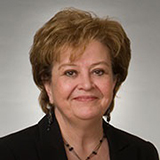
Hon. Donna Harpauer, Minister
Minister's Office
| Phone | 306-787-6060 |
|---|---|
| fin.minister@gov.sk.ca | |
| Mailing Address | Room 312, 2405 Legislative Drive, Regina, SK, S4S 0B3 |
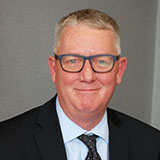
Max Hendricks, Deputy Minister
Deputy Minister's Office
| Phone | 306-787-6621 |
|---|---|
| Fax | 306-787-7155 |
| max.hendricks@gov.sk.ca | |
| Mailing Address | 11th Floor, 2350 Albert Street, Regina, SK, S4P 4A6 |
Chris Bayda, Provincial Comptroller
Provincial Comptroller's Office
| Phone | 306-787-6848 |
|---|---|
| Fax | 306-787-9720 |
| Chris.Bayda@gov.sk.ca | |
| Mailing Address | 8th Floor, 2350 Albert Street, Regina, SK, S4P 4A6 |
Nancy Perras, Assistant Deputy Minister
Revenue Division
| Phone | 306-787-6685 |
|---|---|
| Fax | 306-787-0776 |
| Nancy.Perras@gov.sk.ca | |
| Physical Address | 5th Floor, 2350 Albert Street, Regina, SK, S4P 4A6 |
| Mailing Address | PO Box 200, Regina, SK, S4P 2Z6 |
Cullen Stewart, Assistant Deputy Minister
Fiscal Policy Division
| Phone | 306-787-6731 |
|---|---|
| cullen.stewart3@gov.sk.ca | |
| Mailing Address | 9th Floor, 2350 Albert Street, Regina, SK, S4P 4A6 |
Karen Lautsch, Assistant Deputy Minister
Corporate Services and PMAB Division
| Phone | 306-787-2572 |
|---|---|
| karen.lautsch@gov.sk.ca | |
| Mailing Address | 9th Floor, 2350 Albert Street, Regina, SK, S4P 4A6 |
Brent Hebert, Assistant Deputy Minister
Treasury Board Secretariat
| Phone | 306-787-6780 |
|---|---|
| Fax | 306-787-3982 |
| brent.hebert@gov.sk.ca | |
| Mailing Address | 10th Floor, 2350 Albert Street, Regina, SK, S4P 4A6 |
Rod Balkwill, Assistant Deputy Minister and Chief Investment Officer
Provincial Treasury Office
| Phone | 306-787-9473 |
|---|---|
| rod.balkwill@gov.sk.ca | |
| Mailing Address | 6th Fl, 2350 Albert Street, Regina, SK, S4P 4A6 |
5. Forms and publications
Forms are available for download in PDF format. Please note: printed returns will not be properly micro-encoded, so cannot be paid at a bank or credit union.
Beverage Container Program Form
Direct Deposit Payment Request Form
Financial Administration Manual
First Nations Fuel & Tobacco Tax Forms
Frequently Asked Questions about Government Payment Authorities
Manufacturing & Processing Incentives Forms
Quarterly and Mid-Year Financial Reports
Saskatchewan Electronic Tax Service (SETS) Forms
You can find all publications for this ministry in the Publications Centre.
6. Legislation
The following acts and regulations are administered by the Ministry of Finance and are available in PDF format. The links below are provided with the consent of Office of the King's Printer pursuant to Government of Saskatchewan copyright policies. Printed copies of the legislation are also available through the Freelaw website.
To order or subscribe, please visit the Freelaw website. If you don't have Adobe Reader on your system, you can download it for free.
7. News releases
Read the ministry's most recent news releases
-
Saskatchewan Holds Small Business Tax Rate Reduction at One Per Cent
The Government of Saskatchewan introduced legislation today to provide relief to small businesses in the province. As outlined in the 2024-25...
-
Record $4.4 Billion Capital Budget to Build Schools, Hospitals, Roads and Infrastructure
Budget 2024-25 is investing an all-time high $4.4 billion in capital projects to support classrooms, care and communities and meet the growing...
-
BUDGET 2024-25: Classrooms, Care and Communities
Saskatchewan's 2024-25 Provincial Budget makes record new investments in classrooms, care and communities. Deputy Premier and Finance Minister...
-
Changes to Fees and Charges in 2024-25
Certain fees and charges paid in Saskatchewan will change in 2024-25 to reflect rate freezes, changes to radiation services fees and removal of...
-
Loss Reports Tabled
The most recent quarterly reports on losses of public money within government ministries and Crown corporations, for the period from October 1,...